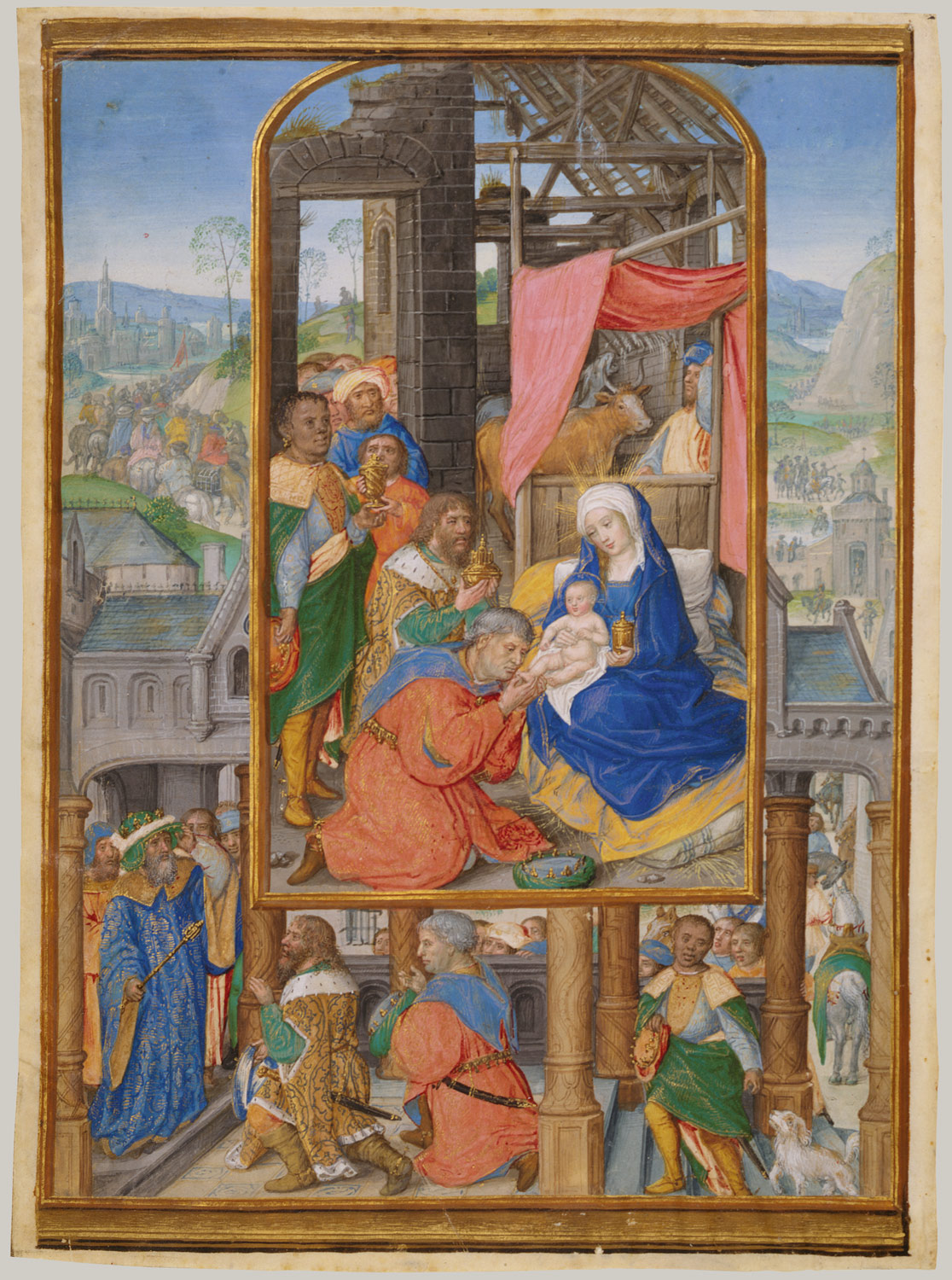

Adoration of the Magi,
ca. 1520
Attributed to Master of James IV of Scotland (Gerard
Horenbout)
Ink and tempera on vellum; 6 5/8 x 4 4/5 in.
This piece was most likely produced in the Flemish region, near Belgium. It is a manuscript page illustration, from a book of devotional prayers. It is an example of religious medieval art.
The image depicts the Biblical story of the three kings, or magi, presenting gifts to the baby Jesus Christ in the stable; it also shows their journey in the outer frame scenes. Because the illustration was painted in the “window” or “portal” style, the central scene is shown in the middle in a frame that appears to float in front of the bordering scenes. This allows for more of the story to be shown because the image is not made up of just a single scene. The subject itself maintains the traditional story line- the magi visit King Herod, journey to Bethlehem, and bring gifts to the baby Jesus. This accuracy is probably because it serves as an illustration in a religious text. The artist uses illusion of depth, not a simple flat style. He uses form created by shadow and texture to manipulate the viewer's perception, This is how the frame appears to float and yet the consistent landscape in the background brings the scenes together.
The color palette used in this piece was light paired with bright. Red, yellow, blue, and green are the most vivid and are used to contrast each other. The red robes on the kneeling king and blue robes on Mary are a bold combination and draw attention to the baby. The central characters, the royalty and family in the stable, are clearly wearing brighter colors than the other people. This draws focus to them and their clothes may also reflect wealth and power. It is also interesting to note that Mary and Herod are portrayed with the same two colors, though this is most likely to create a visually balanced aesthetic because they are on differing sides of the image.
The light distribution in the piece seems even between the central and border scenes, though it is slightly darker at the top. This is because of the dark stone doorway, wood of the stable roof, and darker blue at the top of the sky, The cast shadows present make the scenes more realistic and helps create illusory form in the buildings and frames by creating depth.
The use of the ink and tempura results in a clean texture that appears smooth. The artist creates implied textures in the rough stones, flowing robes, engraved columns, and smooth frames.
The composition of the illustration is quite interesting due to the artists choice of the illusory window style. The deception is that the central image appears to be floating in front of the other scenes surrounding it. This central image is enclosed by a gold frame, rounded at the top, and baby Jesus is clearly the focus within this frame. He is the lightest subject in this scene, surrounded in a white blanket, and positioned near the lower middle. The royalty lined up in rich color then draws the eye of the viewer to the arched door, to the barn animals and roof.
The upper background landscape, visible across frames, features a fading blue sky, lighter hues in the hills and ground and smaller figures. These do not draw as much attention and show distance and depth. Moving down, the lower scene with Herod and the magi of similar colors as the middle scene though just slightly duller, due to surrounding grey stones and buildings. The figures are just slightly smaller, and the magi appear to be kneeling less than when in the stable, though Herod stands, appearing dominant. The vertical columns draw a visual connection between the images and guide the eye up and down. The structure was effective because it allowed for a story to be told in a single image. It shows the interaction with Herod, the journey of the magi, and their adoration of Jesus. This combination in a single image is effective in a devotional book with limited pages for illustration.
The light distribution in the piece seems even between the central and border scenes, though it is slightly darker at the top. This is because of the dark stone doorway, wood of the stable roof, and darker blue at the top of the sky, The cast shadows present make the scenes more realistic and helps create illusory form in the buildings and frames by creating depth.
The use of the ink and tempura results in a clean texture that appears smooth. The artist creates implied textures in the rough stones, flowing robes, engraved columns, and smooth frames.
The composition of the illustration is quite interesting due to the artists choice of the illusory window style. The deception is that the central image appears to be floating in front of the other scenes surrounding it. This central image is enclosed by a gold frame, rounded at the top, and baby Jesus is clearly the focus within this frame. He is the lightest subject in this scene, surrounded in a white blanket, and positioned near the lower middle. The royalty lined up in rich color then draws the eye of the viewer to the arched door, to the barn animals and roof.
The upper background landscape, visible across frames, features a fading blue sky, lighter hues in the hills and ground and smaller figures. These do not draw as much attention and show distance and depth. Moving down, the lower scene with Herod and the magi of similar colors as the middle scene though just slightly duller, due to surrounding grey stones and buildings. The figures are just slightly smaller, and the magi appear to be kneeling less than when in the stable, though Herod stands, appearing dominant. The vertical columns draw a visual connection between the images and guide the eye up and down. The structure was effective because it allowed for a story to be told in a single image. It shows the interaction with Herod, the journey of the magi, and their adoration of Jesus. This combination in a single image is effective in a devotional book with limited pages for illustration.
The illustration was created with the purpose of communicating a religious story in an aesthetically pleasing way. The format serves to stimulate the viewer as they experience the devotional prayer book. This piece clearly depicts a story as told from the Bible; it is not communicating a unique message from the artist, though it can provide insight in to the values of the 1500's in Europe. The intended audience would have been Christian, most likely Protestant or Catholic, depending on where the prayer book was circulated. While the journey of the magi would have taken place far in the past, these people are depicted in clothes that share characteristics of the popular noble style of the 1500's. There are large, puffy sleeves, draping robes with large collars, chest plates, though the outfits seem less ornate or intricate. The style of building is also similar in style to the time period. This inclusion of contemporary style would help the original viewer to be comfortable and connected to the piece. Today, almost 500 years later, this artwork is still significant. People still practice Christianity and read the Bible, so the story is still understood and relevant. This illustration offers insight about its subject matter, the time period it originates from, and its artist; it serves as a historical source and an exemplar of visual art.
(image courtesy of http://www.metmuseum.org)
Click here for an educational hip-hop experience.

AWESOME job. That is all.
ReplyDelete